Low-Cost Sustainability Practices That Actually Work at Corporate Events

Let’s start planning your next corporate event?
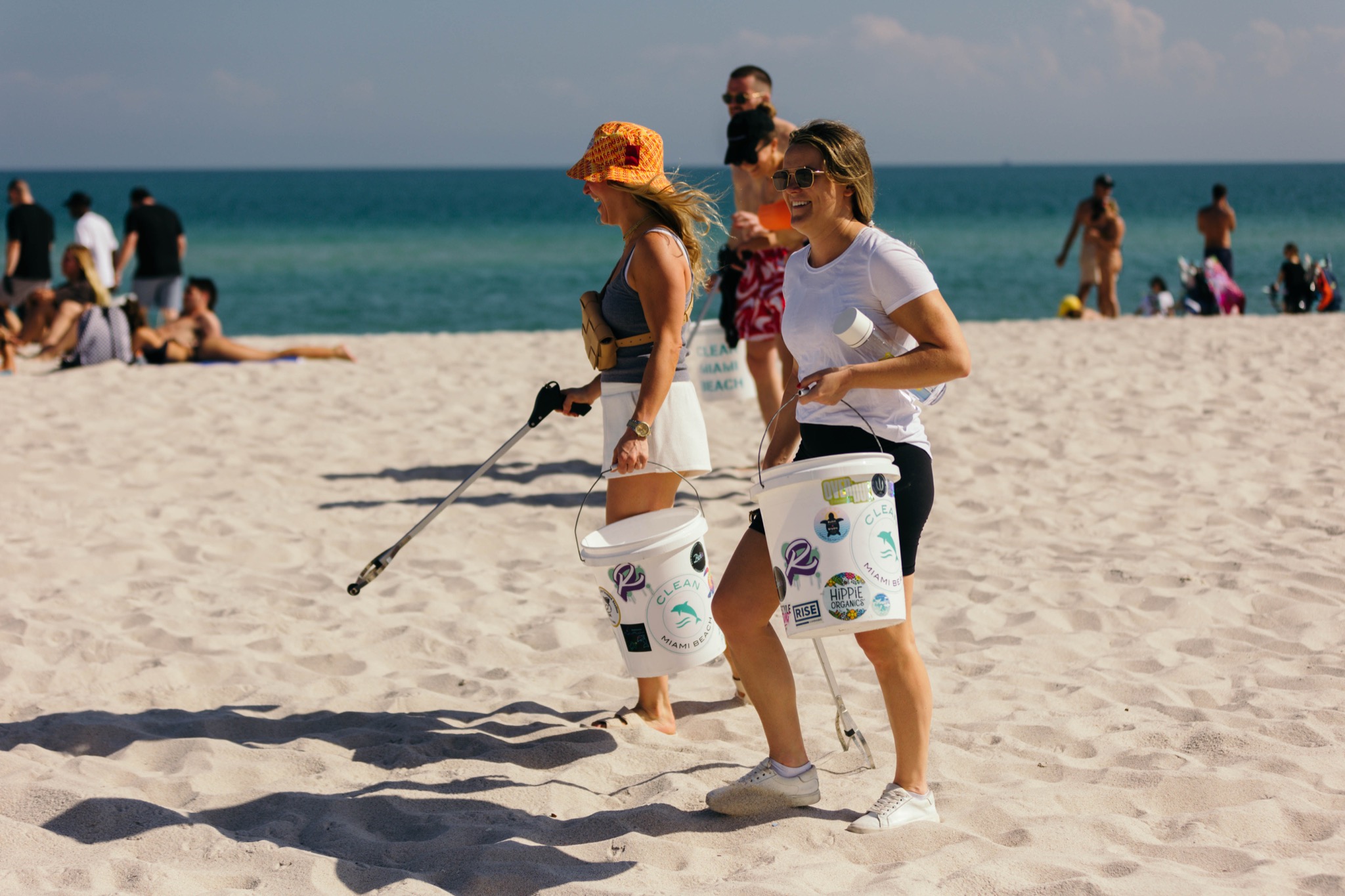
The clients we work with care about sustainability. We know this because we seek out clients and partners who match and support our own values. However, we repeatedly hear a common misconception about sustainability practices from their stakeholders. That making sustainable choices for your corporate event is an uphill battle that requires additional spend, adds complexity, or compromises the experience. The good news is that isn’t our experience. There are many impactful sustainability practices that are low-cost or cost-neutral. Some of them actually save our clients money. They just require intentional planning, a production partner who already knows where to look and what to ask, and time to execute.
At Bash Creative, sustainability is already part of how we produce events. In fact, we build in sustainability efforts at events that our clients don’t even get a choice to sign off on. There is no impact on the client, but the impact we have on the planet is measurable. If your team has been trying to make more responsible choices but keeps hitting friction around cost or complexity, we would love to have that conversation.
Ultimately, you do not need an agency partner to help you keep sustainability top of mind, and it doesn’t require you to overhaul your entire event strategy. It is about making smarter choices in the places where waste tends to hide and where small swaps create a real, measurable difference.
Here are seven low-cost sustainability swaps you can bring to your next corporate event.
1. Rethink Your Water Strategy
This one is simple and immediately signals how your company operates.
Swap single-use plastic water bottles for glass, aluminum, boxed, or dispenser alternatives. Reusable water filtration stations are another strong option, especially for multi-day events or venues with high foot traffic. Your attendees will not miss the plastic, and they will notice the intentionality.
At Bash Creative, we do not use plastic water bottles on-site or in shipped items. We source sustainable alternatives because it is one of the easiest places to start. Plus, a reusable water bottle is always a great swag and sponsorship option. So this choice actually can be one where you save a lot of money on the bottom line of your budget.
2. Choose Materials That Have a Next Life
Event production uses a lot of one-time-use materials for signage, scenic builds, stage elements, expo setups. Most of it gets used once and thrown away. But does it have to? Start by asking your print vendor one question: Is there a more sustainable version of this material? You would be surprised how often the answer is yes.
Falconboard and other recyclable substrates can replace foam PVC and Gatorboard in most signage applications. SEG frames with swappable fabric graphics can be purchased or rented and reused across multiple events, eliminating the need for single-use printed backdrops. And here is one most people do not know… Stage carpet made from recycled water bottles is a real product that many production vendors already carry.
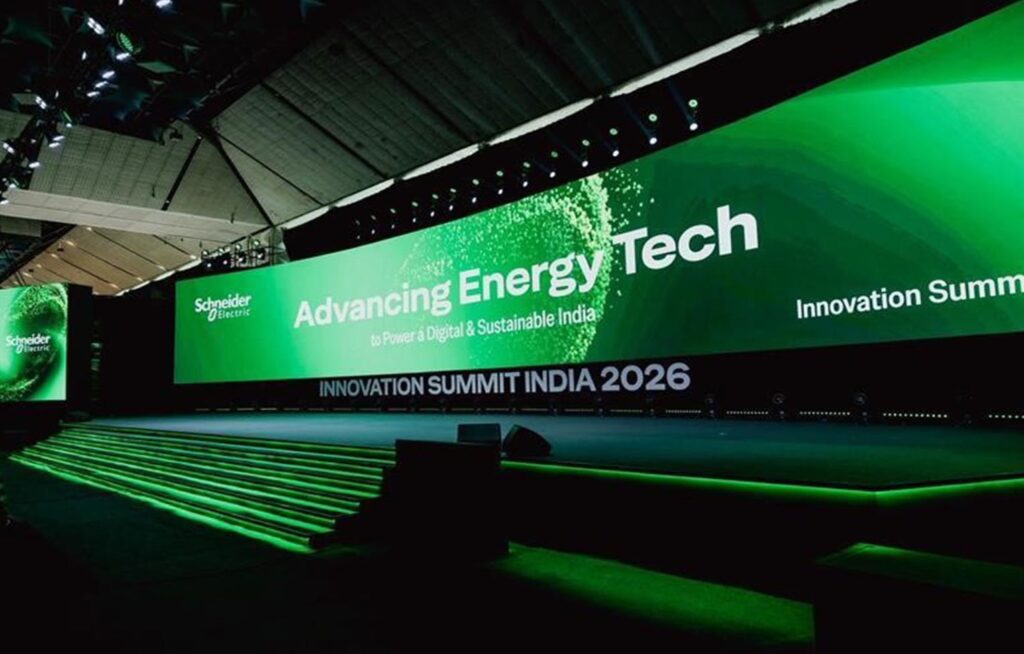
This shift doesn’t require a bigger budget, but it does require a production partner who knows what options exist and is willing to ask the right questions on your behalf. Take it a step further and there are a few companies out there that will turn your old signage fabrics and turn them into notebooks or bags. A great thank-you gift for your speakers and VIPs. They can literally have a piece of the event to keep.
3. Design Signage and Scenic for Reuse or Consider Digital Options
Instead of designing fully custom scenic builds for a single event, consider a rental-first strategy with light customization. Evergreen creative elements and modular layouts can be designed for multi-program use, so you are not rebuilding from scratch every time.
This approach reduces material waste while often lowering production costs. It also means your branding infrastructure gets stronger and more refined over time instead of ending up in a dumpster after load-out.
When you are evaluating scenic and signage plans, ask: Can any of this be reused, returned, or repurposed? If the answer is no across the board, there is likely a better path. That plan might even take you the digital route. We often have hybrid scenic elements that include LED and digital graphic walls.
Not everything needs to be printed. Digital agendas, mobile activations, and digital signage can replace a significant amount of paper and physical materials without diminishing the attendee experience. In many cases, they actually improve it. We all know there is always a last minute schedule or agenda change on-site and this could save you thousands when you can adjust everything with the click of a button vs reprint in a rush.
That said, we are not suggesting you eliminate print entirely. Some moments genuinely benefit from a physical touchpoint, whether that is a beautifully designed menu, an accessibility accommodation, or a branded element that creates a lasting tactile impression. The key is printing with purpose. Print when it improves the experience. Go digital when it does not make a difference either way.
4. Make Swag Useful or Do Not Make It At All
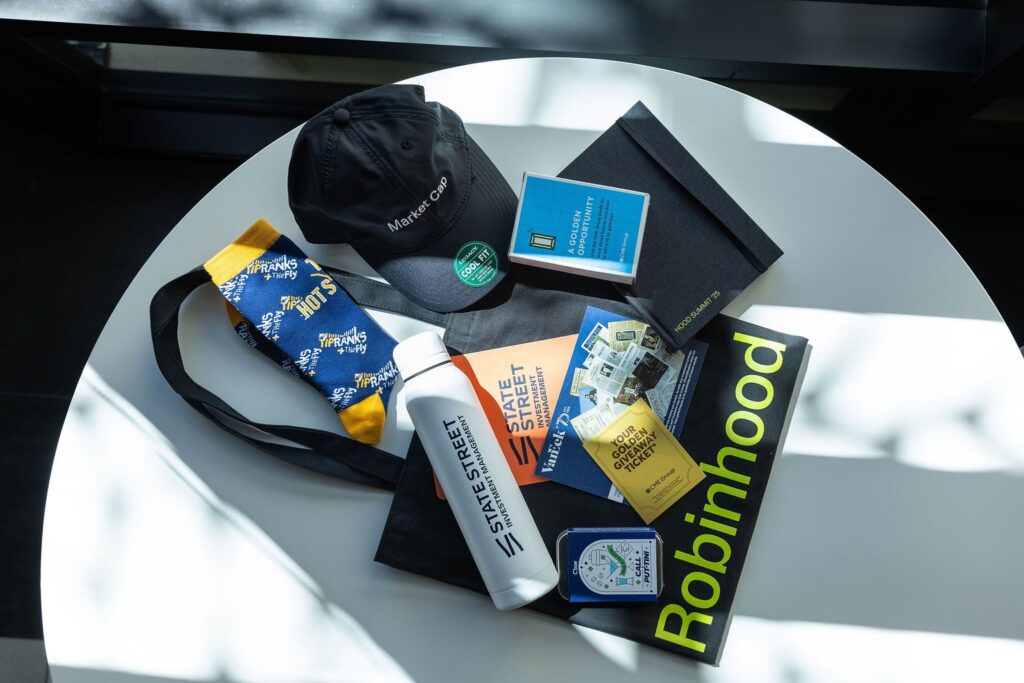
We understand the cost implications here. Sustainable swag can carry a higher price tag than the cheaper giveaway alternatives. But there is a major reason why. Cheap swag is made in countries where labor laws are not very strict, using materials that can leech toxins or deteriorate quickly, and are never recyclable. They come on a containership to you from half way across the globe and have been shipped and trucked all over the country, creating quite the carbon footprint you are not aware of. Here is the real cost question: What is the return on two hundred branded stress balls that end up in a landfill within a week?
Utility-driven or consumable items sourced from low-carbon, recycled-content, or local vendors are more likely to be kept, used, and appreciated. Think of items people would actually purchase for themselves or their family. If it is not something an attendee would put in their bag on purpose, it likely shouldn’t be in your budget.
Packaging matters too. Minimal, recyclable, or compostable packaging with opt-in or on-demand fulfillment reduces waste before the swag even reaches someone’s hands. If ordering in bulk from one vendor, ask them not to wrap everything individually and just package properly to avoid damage in transit. That reduces a lot of waste AND saves you tons of time unpacking each individual item.
We dove deeper into this topic in our blog on sustainable end-of-year corporate gifting.
5. Source Local, Eat Seasonal, Recover What Is Left
Food is one of the largest areas of waste at corporate events, and one of the easiest places to make a meaningful difference.
Local and seasonal menus reduce carbon intensity from sourcing and transportation while often tasting better and supporting the regional economy. Buffet service and shared stations cut down on single-use packaging compared to individually wrapped or boxed meals. And compostable or reusable (glass, china, metal) materials for any hosted meal should be the standard, not the exception. We do not use Styrofoam at Bash Creative events. Period.
The piece most teams overlook is what happens to the food that does not get eaten. Build a food recovery plan before the event, not after. Organizations like Replate and Food Rescue US can coordinate pickup of surplus food and redirect it to communities that need it. Establishing a relationship with the local recovery organization in the planning process makes a tangible impact after the event ends. Think of all the families you could be feeding!
6. Collect What You Can Reuse
Some of the simplest sustainability wins happen during load-out when most teams are already thinking about the next thing.
Set up collection points for badges and lanyards at the end of your event. Evergreen lanyards and recyclable or paper-based badges can be designed for multi-year reuse, saving money and materials on your next event. Digital registration and check-in can further reduce paper waste, cutting down on printing, reprints, and the piles of name badges that typically go straight into the trash.
For decor and scenic elements, create a Keep/Kill deck to present to your client or internal team before the event. Decide what is worth storing, what can be donated, and what needs to be properly recycled or disposed of. Local schools will often accept items like Gatorboard for art projects. Habitat for Humanity and Goodwill can handle larger furniture and decor donations, and many offer pickup. We have even sent one-time use furniture home with the staff and they are THRILLED to give these beautiful pieces a new home.
You know you are truly an event producer when a large percentage of your home is furnished with items from past shows.
7. Source Local Workers
One of the easiest ways to reduce your event’s carbon footprint as well as your budget is to hire locally. Every team member you don’t fly in is a flight, a hotel room, and a per diem you’re not paying for, and emissions you’re not generating.
At Bash, we’ve built a global network of event professionals for exactly this reason. For every event, we fly in a small senior team to lead production and staff the rest of the crew locally. It’s a sustainability measure as well as a better production decision. Local crews know the venues, the vendors, the city. They’ve loaded in at that convention center before. They know which dock is fastest, which elevator actually works, and where to go when you need something last-minute at 11pm. That kind of knowledge is invaluable on-site, especially when things move fast.
The result of this shift is a smaller travel footprint, lower costs for travel and accommodations, and a crew that brings both Bash’s standards and local expertise to every event.
None of This Requires Perfection
“Including sustainability practices into your live events is not about being perfect. It is about being considerate. Any and all adjustments you make are going to have an impact and also off-set where you do have impact.” -Annalee Hagood-Earl | Founder + CEO, Bash Creative
The companies we love working with are the ones that care about this. They may not have every answer yet, but they are asking the right questions and looking for a partner who already has the systems, vendor relationships, and reporting tools to make sustainability part of the production process rather than an afterthought.
At Bash Creative, sustainability is top of mind during every event we produce. We focus on practical decisions that reduce waste, support local partners, and use resources responsibly. We know how to do this without added cost, complexity, or compromise. We track the impact across four core areas, resources, energy, air, and people. We also provide sustainability reporting for our clients so the impact is documented and tangible.
See how these principles came to life at the Oceans Solutions Gala, where sustainability was central to the event’s mission and our production approach.
If your company is looking to make more intentional choices at your next event, we would love to talk about how we can make that easier. Sustainability should not feel like a tradeoff. With the right partner, it is just how good events get made.
Frequently Asked Questions About Sustainable Corporate Events
How can I make my corporate event more sustainable on a budget?
Start with low-cost or cost-neutral swaps like eliminating plastic water bottles, choosing recyclable signage materials, going digital-first for agendas and registration, and building a food recovery plan for surplus meals. Many of the most impactful sustainability practices do not require additional budget. They require a production partner who knows the right alternatives and vendors.
What are easy sustainability swaps for corporate events?
Replace plastic water bottles with glass, aluminum, or dispenser alternatives. Use recyclable substrates like Falconboard instead of foam PVC. Design signage and scenic elements for reuse. Choose local and seasonal catering. Collect badges and lanyards for future events. Go digital where print is not adding clear value.
How do you reduce waste at a large corporate event?
Reduce waste by prioritizing rentals over custom builds, designing modular and reusable scenic elements, sourcing compostable materials for food service, setting up proper recycling and composting stations, creating a post-event Keep/Kill plan for decor and materials, and partnering with food recovery organizations for surplus meals.
What sustainable materials should I use for event signage?
Falconboard and other recyclable substrates are strong alternatives to foam PVC and Gatorboard. SEG frames with fabric graphics can be reused across multiple events. Evergreen creative layouts and modular designs reduce the need for single-use printed materials. Always ask your print vendor whether a more sustainable option exists for the specific application.
How do you handle leftover food after a corporate event?
Build a food recovery plan into your event logistics before the event takes place. Partner with organizations like Replate or Food Rescue US to coordinate pickup and donation of surplus food. Plan your menu quantities carefully, use buffet or shared service to reduce individual packaging waste, and ensure any single-use items are compostable.

Owner + Director of Event Operations, Bash Creative
Danielle is the operational backbone of Bash Creative and the standard-setter behind how the company plans, runs, and delivers events. With over 20 years of large-scale yet bespoke event experience, Danielle has perfected the art of transforming production chaos into symphony. As Bash’s steady conductor, she leads with razor-sharp perception and unshakable calm, keeping every moving piece synchronized even under intense pressure. Her dedication to agility translates directly into the quality of service she delivers. With a production philosophy built on anticipation, clarity, and ownership, she has developed the internal systems and frameworks that allow Bash to scale without sacrificing precision or care.
At Bash Creative we don’t just expertly manage logistics. We curate experiences that strategically align to your company’s vision and goals to transform your guests into brand evangelists.
Curious to learn how we make that magic happen?