What the Experiential Marketing Summit Reminded Us About Why Experiences Matter
Let’s start planning your next corporate event?
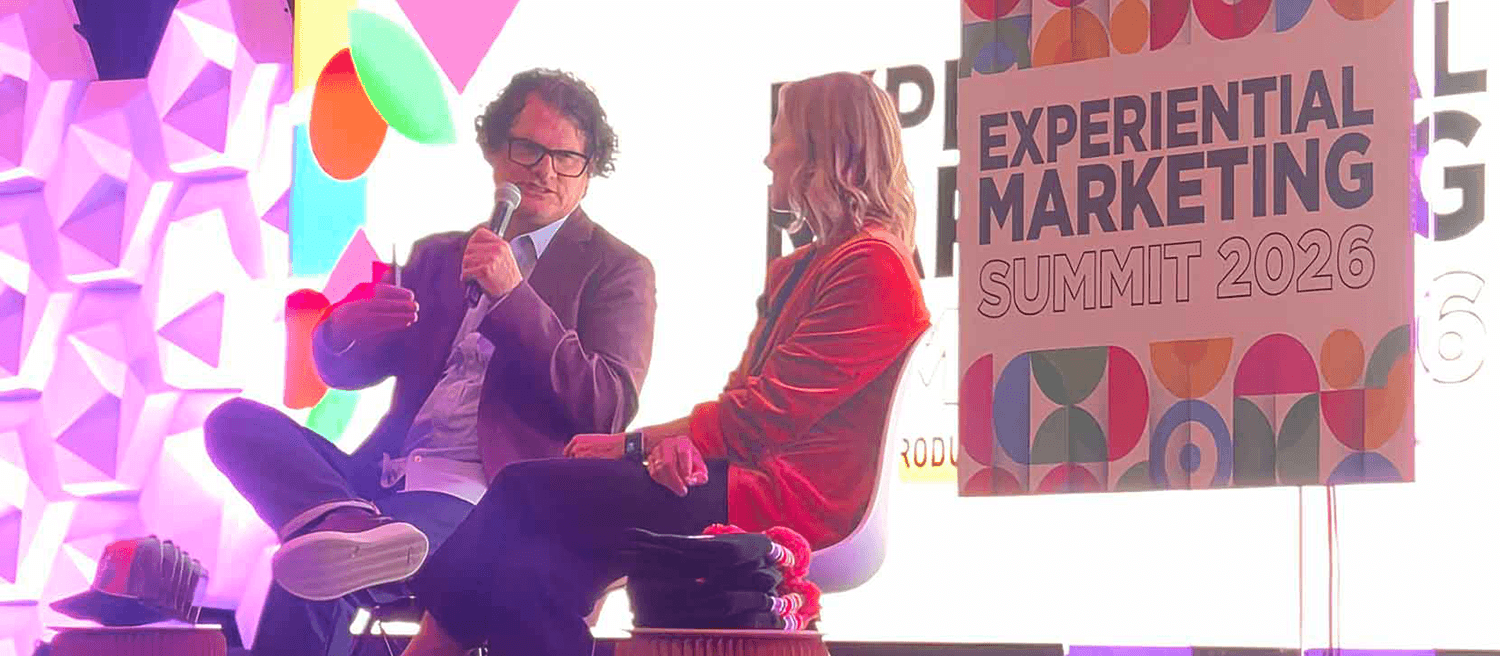
The Experiential Marketing Summit reinforced something we’ve seen firsthand for years: the most successful companies don’t use events to entertain people. They use events to align people.
By Bash Creative
The most valuable reminder from EMS was one we’ve built our business around: every strong experience starts with a clear understanding of what needs to change after the event ends. The sessions that stayed with us kept returning to the same questions. Why should this experience exist? What does the audience need from it? How will we know it worked?
For marketing and event leaders, this changes how success should be measured. A user conference, SKO, client summit, or brand activation shouldn’t be judged by attendance alone. The better question is whether the experience changed how people understood the organization, their role within it, and what they should do next.
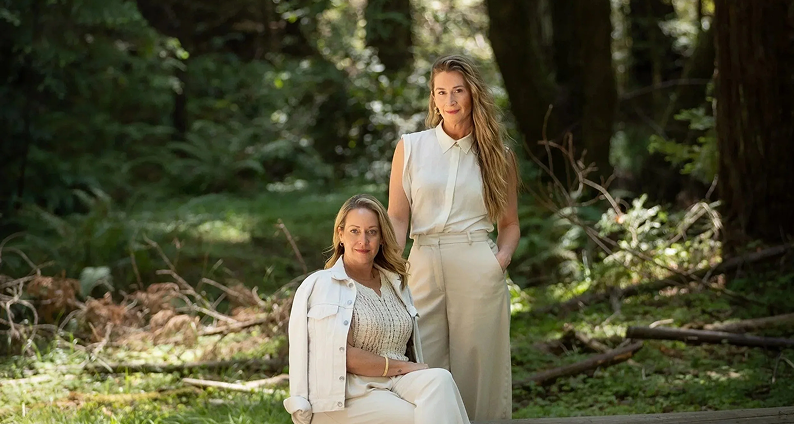
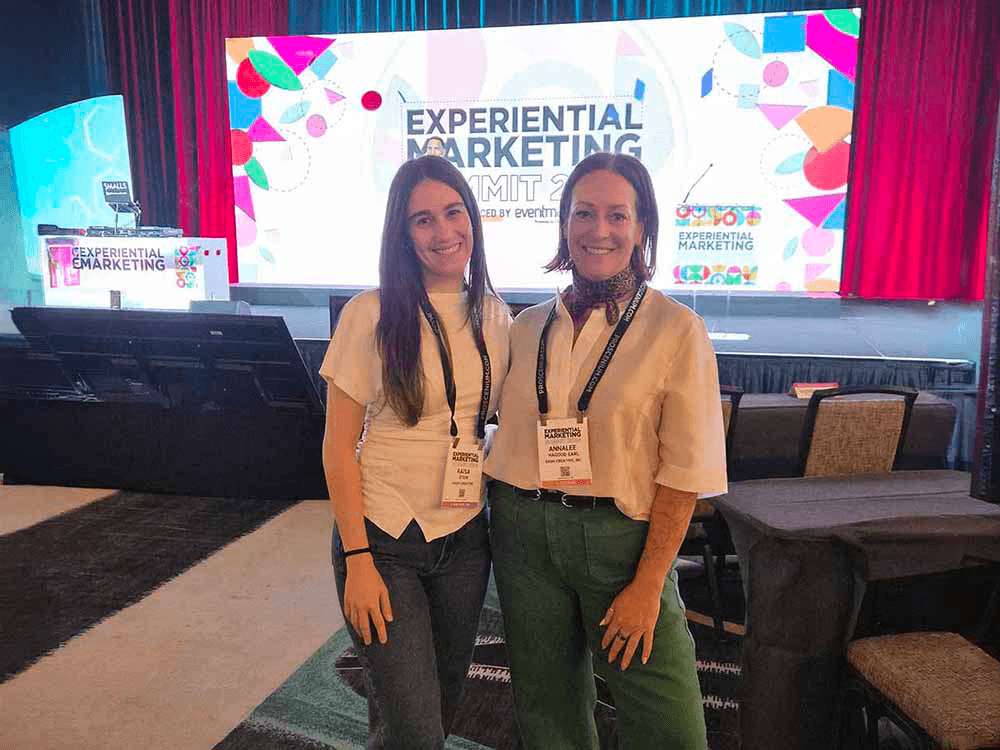
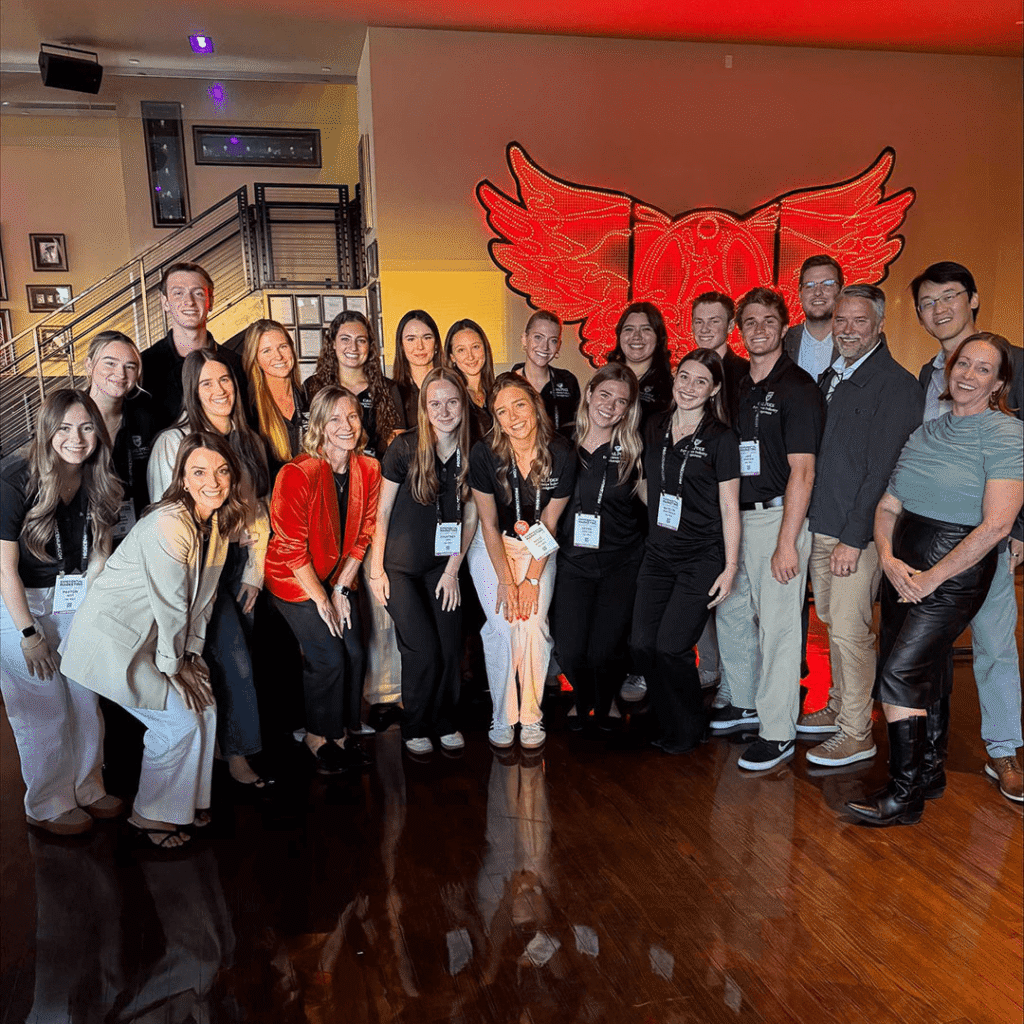
This year, our CEO Annalee Hagood-Earl and producer Raisa Stein attended EMS together for some mind-expanding bonding. Annalee came to deepen her understanding of where the industry is heading, explore the challenges practitioners are actively navigating, and spend meaningful time with clients and vendor partners. Raisa came to connect with vendors, absorb new frameworks, and get a firsthand read on the trends shaping the experiential space. They arrived with different goals and left with the same takeaway: the industry is asking better questions than it has in years.
What made this particular summit worth noting is something that does not happen often enough in our industry. EMS brings buyers and suppliers into the same room, which is a rare occasion for genuine cross-sector thought leadership. Most industry gatherings tend to be segmented to one side or the other, and the conversations that happen when both are present have a different quality entirely.
On The Ground
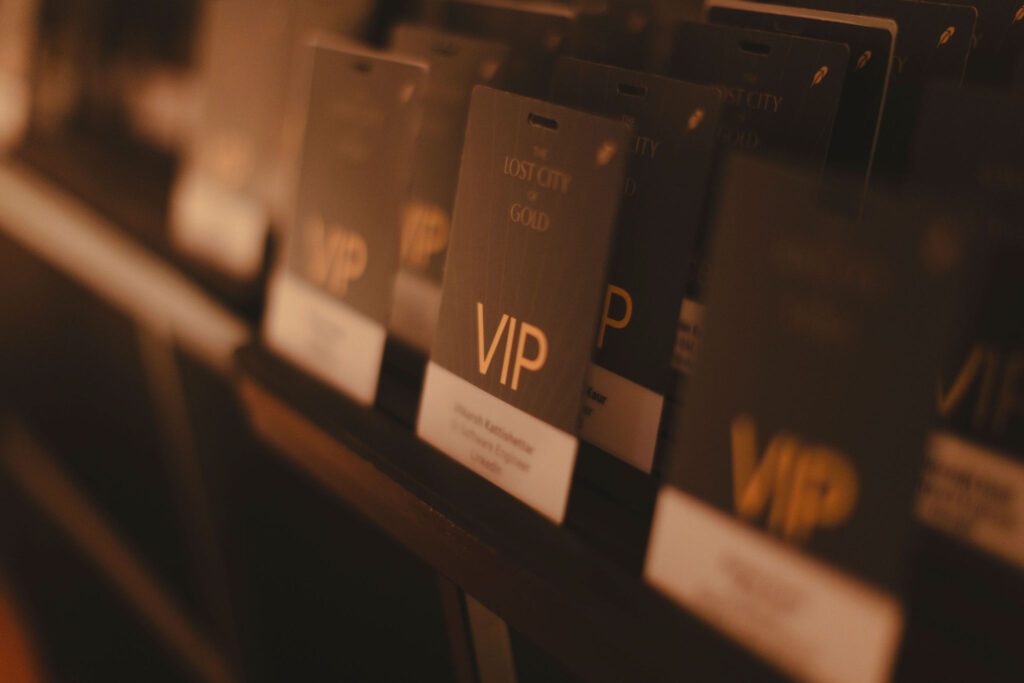
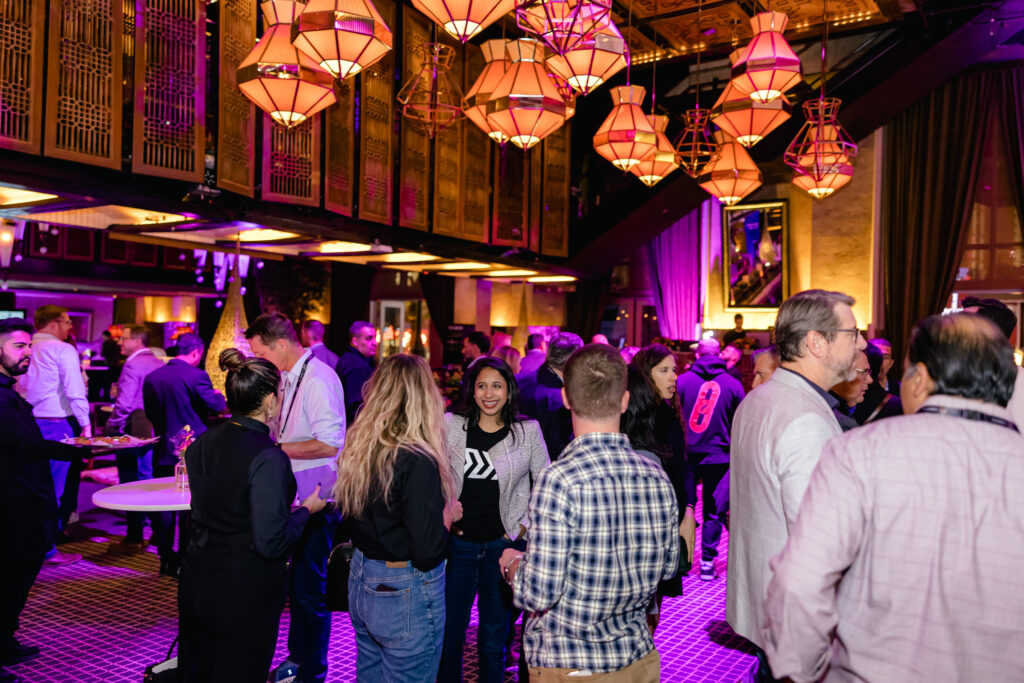
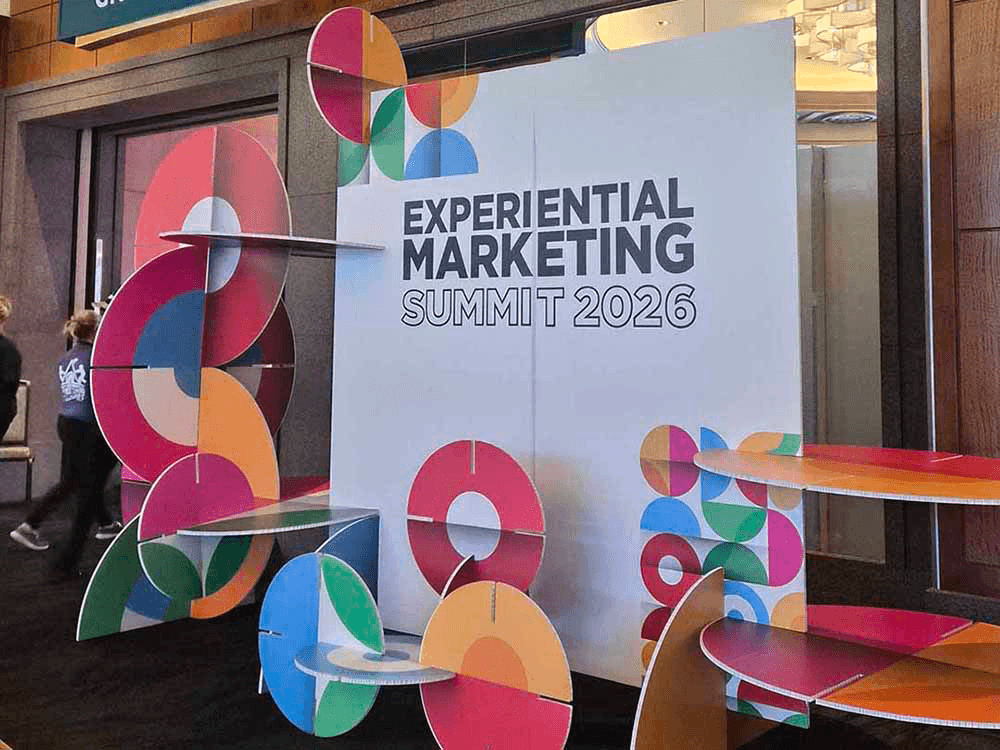
EMS is produced by Event Marketer, and it is where the experiential industry gathers to think out loud. Brands, agencies, producers, and strategists are all working through the same questions in the same space. The sessions are strong. The hallway conversations are just as valuable. Casual lunchtime in the MGM Conference Center’s foyer lounges turned out to be one of the best networking windows of the summit.
We spent meaningful time with some of our favorite partners in the experiential world, including wonderMakr, OCVIBE, and Non Plus Ultra. We also connected with clients in attendance, including Blake Harrison from Marqeta. Learning alongside the people you build with and the people you build for has a quality to it that a standard check-in cannot replicate.
The energy of EMS matched its content in a way that does not always happen at conferences. A clear through-line ran across sessions, hallways, meals, and activations. The industry is moving away from spectacle for spectacle’s sake and toward experiences designed to create meaningful change.
Curtain Call: A Keynote Worth A Standing Ovation
Jimmy Knowles from Canva opened the conference with a keynote worth calling out specifically.
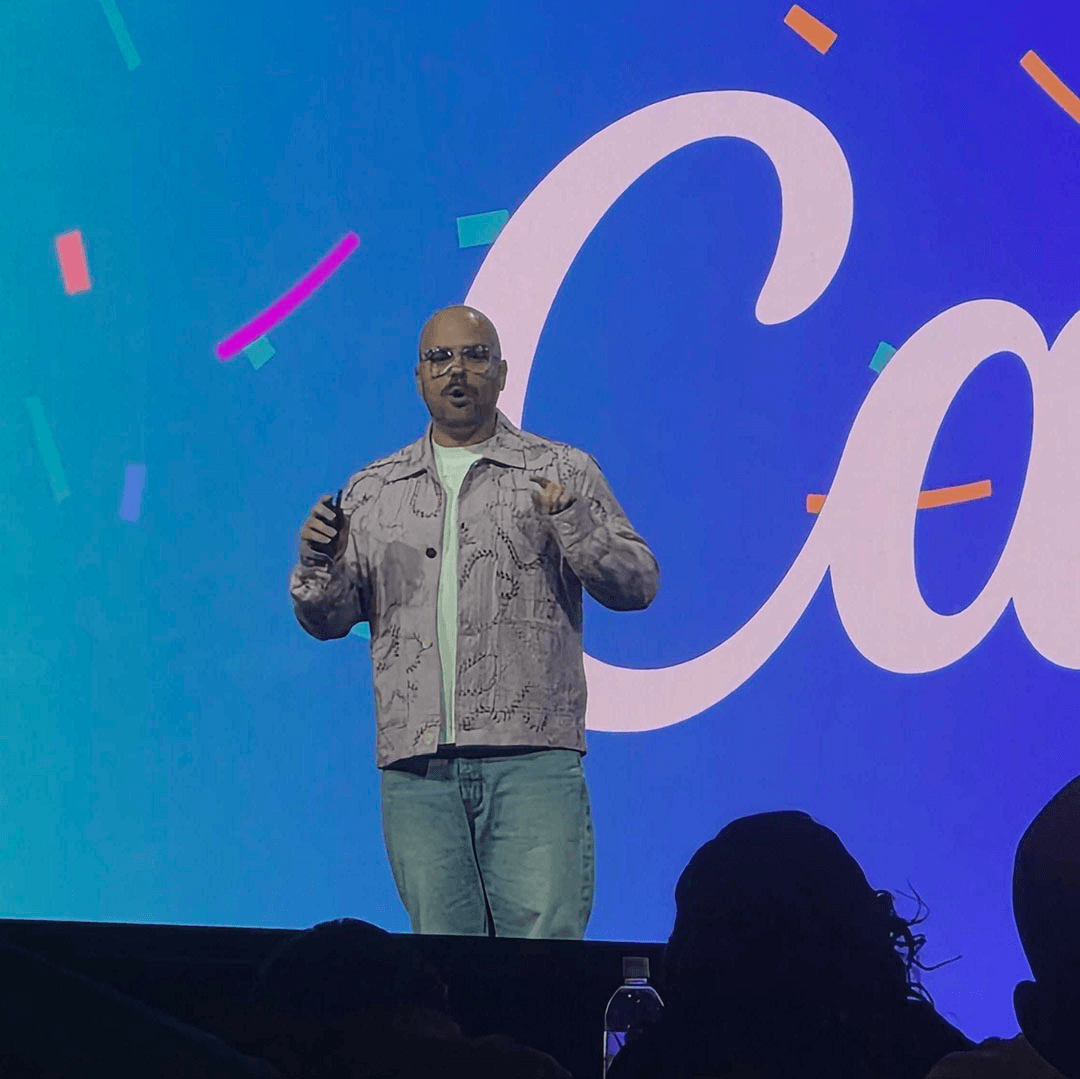
He showed up as completely himself. Joyful, expressive, and present in a way that is rare when someone is standing in front of a room that size. He shared his history in performing arts and how the community, creativity, and flexibility it took to get a standing ovation could be translated to how brands tell their stories. Even more specifically, how we can look at each event, each experience, as a theatrical production.
The message underneath it was clear: our responsibility as experience creators is to build environments where people feel seen, valued, and connected. Belonging is one of the most powerful outcomes an experience can create, and it’s often far more difficult to design than most briefs acknowledge. Watching someone model that from the stage, embodying the thing he was asking the room to create for others, was one of those moments where the format and the content become the same thing. It framed everything that followed.
Another Home Run: Experiential At Scale
One of the highlights of the summit was hearing how organizations are extending experiences beyond a single event and into broader communities. One of the strongest examples came from the San Francisco Giants, whose team has expanded the fan experience beyond the stadium and into the surrounding community year-round. That work is a testament to a team thinking about audience experience at a community scale.
Between The Lines: What the Sessions Were Really Saying
The programming at EMS consistently prioritized emotional impact over production scale. And when you looked at what was underneath that shift, a clear pattern emerged: everything was being examined through the lens of root cause.
Across nearly every session, the message was the same: start with the why before moving into creative and execution. Why does this experience need to exist? What is the real problem it is solving for the audience? What behavioral change does it need to produce? Only after those questions are answered does the creative work earn its footing. That approach consistently produces stronger outcomes because it forces teams to solve the right problem before they start building solutions.
Return on Emotion (ROE) surfaced alongside ROI throughout the conference. With the help of AI, brands are beginning to measure experiential success through emotional resonance, memory creation, and human connection rather than attendance figures and impression counts alone. For an industry that has long defaulted to reach and visibility as its primary metrics, that represents a meaningful shift.
The conversation around briefing and audience intelligence reinforced the same idea. Better briefing produces better creative. Agencies are increasingly expected to bring strategic insight to engagements, not just execution capability. And personalization has moved from a differentiator to a baseline expectation. The agencies that have not caught up to that are going to feel it.
At Bash, we’ve always believed that audience understanding isn’t a planning step. It’s the foundation for everything that follows. It was encouraging to hear that perspective reflected back from across the industry.
In our client work, root cause comes before venue sourcing, creative development, budget allocation, and production planning. We use it to pressure-test the brief. Who is this experience for? What does the business need from them afterward? What will help them feel connected enough to act? The answers shape the budget, the guest journey, the room design, the content, and the moments that need the most operational support. That is the work we do every day inside our consulting and strategy engagements.
AI Is Becoming an Event Strategy Tool
It would be impossible to recap EMS 2026 without talking about artificial intelligence, because the industry is clearly no longer asking whether AI belongs in experiential. It is asking how to use it well.
The conversation at this year’s summit was grounded and practical. AI is solving for one of the most persistent challenges in our field: the difficulty of measuring emotional impact and return on experience in any reliable or scalable way. The tools now available are helping agencies, brands, and vendors aggregate data more efficiently, draw meaningful insights from attendee behavior, and translate those insights into smarter decisions before, during, and after an event.
Personalization was one of the clearest areas of impact discussed. AI is making it possible to design attendee journeys that respond to individual behaviors and preferences at a scale that would have been logistically impossible just a few years ago. That is not a small development for an industry built on the idea that every person in the room should feel like the experience was made for them.
What stood out most in these conversations was the tone. There was no anxiety about AI replacing creative work. The prevailing sentiment was almost the opposite: when teams are better informed by data, when the time spent on manual processes is reclaimed, the creative work gets sharper. People exercise their strengths more fully when they are not buried in the operational weight of trying to measure and manage everything manually. AI is not diminishing the human side of this work. It is giving people more room to be good at it.
The most important limitation is also the simplest: AI can only improve a strong strategy. It cannot replace the human responsibility of deciding what matters, understanding people, and designing experiences that reflect those realities.
Start With Root Cause Before You Start Designing
Michael Orlinski from Cramer led one of the most thought-provoking sessions of the summit on behavioral science and experiential events. His central challenge to the room was direct: most experience makers move into design before they understand why they are designing anything at all.
The distinction he drew is one every event leader should understand:
• Goals are the tangible outputs of an experience: registrations, attendance, impressions, engagement metrics.
• The Why is the behavioral change you are trying to create. What should people think, do, or feel differently after this experience ends?
The framework he presented asks you to begin with behavioral intent and build your goals and KPIs outward from there. Design comes after that clarity is established.
For most people in this industry, that is an uncomfortable inversion. Experience makers are wired to ideate early. A venue suggests a concept. A theme suggests an aesthetic. This session reinforced an approach we already use with clients: strategy first, design second.
What to clarify before you design the experience
• What should the audience think, feel, or do differently after this event?
• What business outcome does that shift support?
• Where is the audience currently stuck, skeptical, disconnected, or overloaded?
• What moment in the experience will help create the shift?
• How will we measure whether it worked?
Adaptability Is Part of Great Event Production
Jeffrey Quezada from Citi shared the story of bringing Citi Haus to life at the World Economic Forum in Davos, and what made his session stand out had nothing to do with the scale of the production. It was his willingness to talk candidly about everything that did not go as planned and how his team handled it in real time.
That kind of honesty is not common in a public presentation. Most case studies presented at conferences are polished retrospectives. Jeffrey’s was different. He walked the room through the actual experience of producing in an environment where the stakes were high and variables were constantly shifting:
• The entire city block Citi had taken over needed to shut down when the President of the United States moved through the area, requiring real-time decisions under significant pressure.
• The venue’s photogenic location made it a natural gathering point for WEF protesters. The team had to act quickly to ensure Citi’s branding was not visible in footage unrelated to them.
• Privacy was essential given the caliber of attendees, but the space was designed to feel open and bright. Custom window clings solved for both, creating visual privacy inside without blocking natural light from outside.
What made the room respond to this session was recognition. Every producer in that room has lived a version of this: the moment when the plan meets reality and you have to hold everything together without showing the seam. Jeffrey gave that reality a clear framework. The best producers are not defined by perfect plans. They are defined by how they respond when plans change. That is the standard we strive for on every Bash production.
What We’re Bringing Back to Client Work
Begin with root cause. The why behind an event is the specific behavioral change you want to create. Establishing that clarity before anything is designed changes the quality of every decision that follows.
Design for belonging. When an experience is built around a person’s need to be seen and to feel they belong, it operates at a different level than one built around logistics and programming. That is a harder brief to write and a more meaningful one to solve.
Adaptability is part of the creative work. The most sophisticated experiential work often happens in the gap between what was planned and what actually unfolds. The teams that move through that space with composure are the ones producing the most reliable work.
Intentionality outperforms scale. Audience understanding and creative clarity consistently produce stronger outcomes than production volume. That is a principle we already build around at Bash.
Use AI to go deeper, not just faster. The opportunity is not efficiency alone. It is using better data to make more informed creative decisions and deliver more personal experiences to every person in the room.
Connection outlasts spectacle. Experiences that build genuine community tend to matter longer after the event ends than ones built primarily around reach and attendance.
We left EMS with stronger conviction around what matters most: understanding people, creating connection, and designing experiences that move organizations forward. That is the best thing a conference can offer, and we are grateful for the opportunity.
Planning a conference, SKO, customer event, or brand activation that needs to create meaningful business impact? Bring Bash in before the concept is locked. We’ll help define the audience shift you’re trying to create, pressure-test the strategy, and design an experience that aligns people around what comes next. Talk Through Your Event Strategy.

Founder & CEO, Bash Creative
Annalee founded Bash Creative in 2014 after a decade in luxury hospitality with The Pebble Beach Company and Starwood Hotels & Resorts. She holds a degree in Tourism and Special Events from Cal Poly San Luis Obispo and built Bash on a straightforward conviction that transparent partnership and genuine human connection belong at the center of every event. She is a sought-after industry voice on human-centered event design and has spent the last several years expanding Bash’s network while redefining what borderless, values-driven business looks like.
At Bash Creative we don’t just expertly manage logistics. We curate experiences that strategically align to your company’s vision and goals to transform your guests into brand evangelists.
Curious to learn how we make that magic happen?